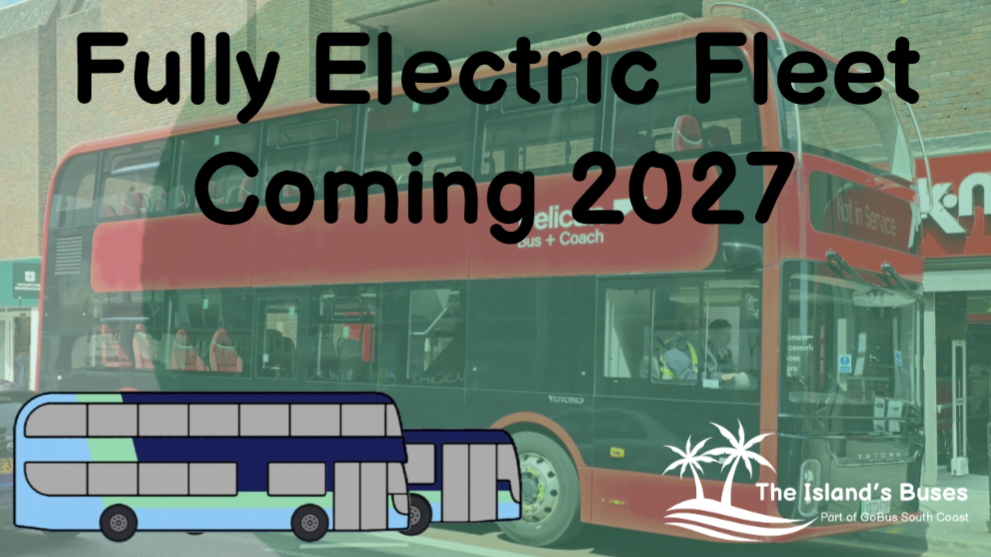
The Island's Buses Announces Bold Plan to Fully Electrify Fleet by 1 January 2027
The Island's Buses has today unveiled an ambitious commitment to transition its entire operational fleet to fully electric vehicles by 1 January 2027—a move the company describes as both "visionary" and "entirely self-driven".
While the Isle of Wight Council recently encouraged all transport operators to explore cleaner options, no specific timeframe was set. The Island's Buses, recognising the urgency of modernisation and the unique challenges of operating on the Island, responded decisively.
"We didn't want a vague goal," said Shay, Managing Director of GoBus South Coast, parent company of The Island's Buses. "If this industry is going to move forward, someone has to step up and actually put a date on the future. So we did. 1 January 2027—done. It's firm, it's measurable, and it's absolutely achievable. We're not waiting for legislation to tell us what progress looks like."
A Comprehensive Transformation
The electrification programme will involve the phased introduction of next-generation battery-electric buses, upgraded depot charging infrastructure at key sites across the Island, and the retirement or redeployment of the remaining diesel fleet.
Charlotte, Operations Director for The Island's Buses, emphasised the operational benefits: "Electric buses aren't just cleaner—they're smoother, quieter, and far better suited to the Island's stop-start terrain. Our team is ready for this shift. We're modernising the network from the ground up, and passengers will feel the difference from day one."
Leading the Way Forward
The company expects the first wave of new electric vehicles to enter service later this year, with larger batches arriving throughout 2026 as infrastructure scales.
This move positions The Island's Buses as one of the fastest-moving transport operators in the region regarding zero-emission conversion. The company remains confident that its early, voluntary commitment will deliver long-term sustainability improvements for both passengers and the Island's unique environment.
Further details—including vehicle models, depot upgrades, and rollout phases—will be published over the coming months.